Restaurants

Freebird Saskatchewan

Inside Saskatchewan’s Rising Food Scene

Chefs across the province are redefining prairie cooking with fearless menus rooted in local ingredients.

By Cathy Senecal

Southwestern Saskatchewan is all blue sky and cumulus clouds over rolling hills and endless grasslands. Across its small towns, a new guard of chefs is reimagining the province’s bounty with menus rooted in prairie flavour.

Harvest Eatery, Shaunavon

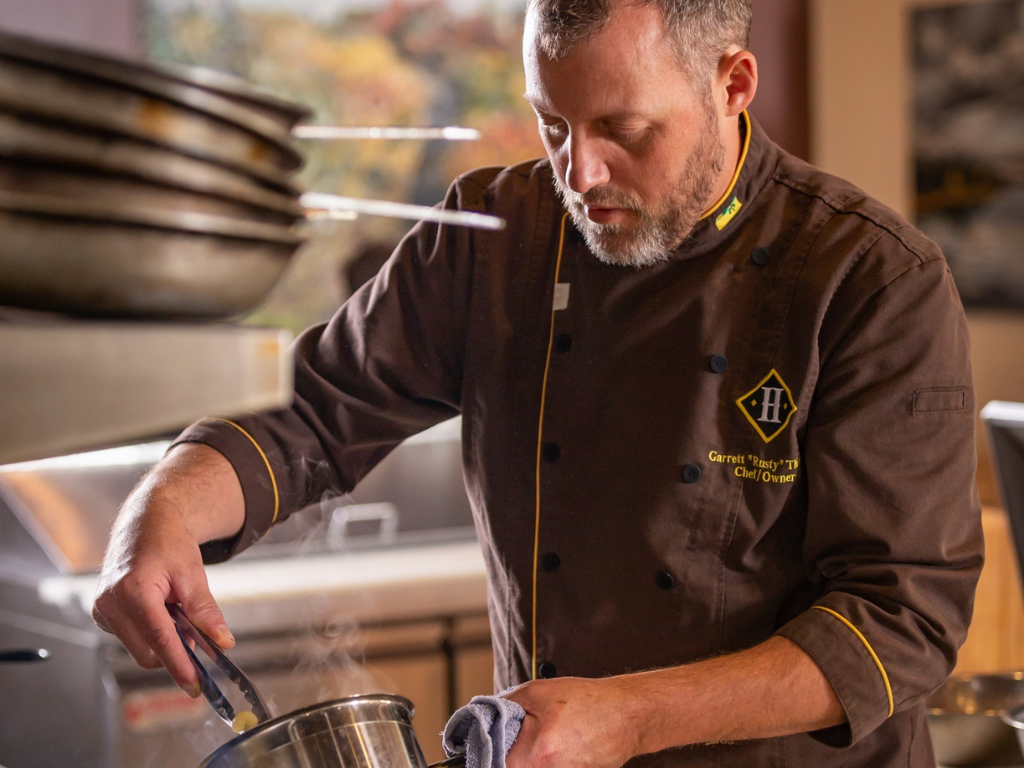
After cooking in renowned restaurants in Alberta and B.C., Garrett “Rusty” Thienes returned home to Shaunavon to raise a family and now creates a stir as chef and co-owner, with his wife Kristy, of Harvest Eatery, an award-winning steakhouse between Grasslands National Park and the Cypress Hills.
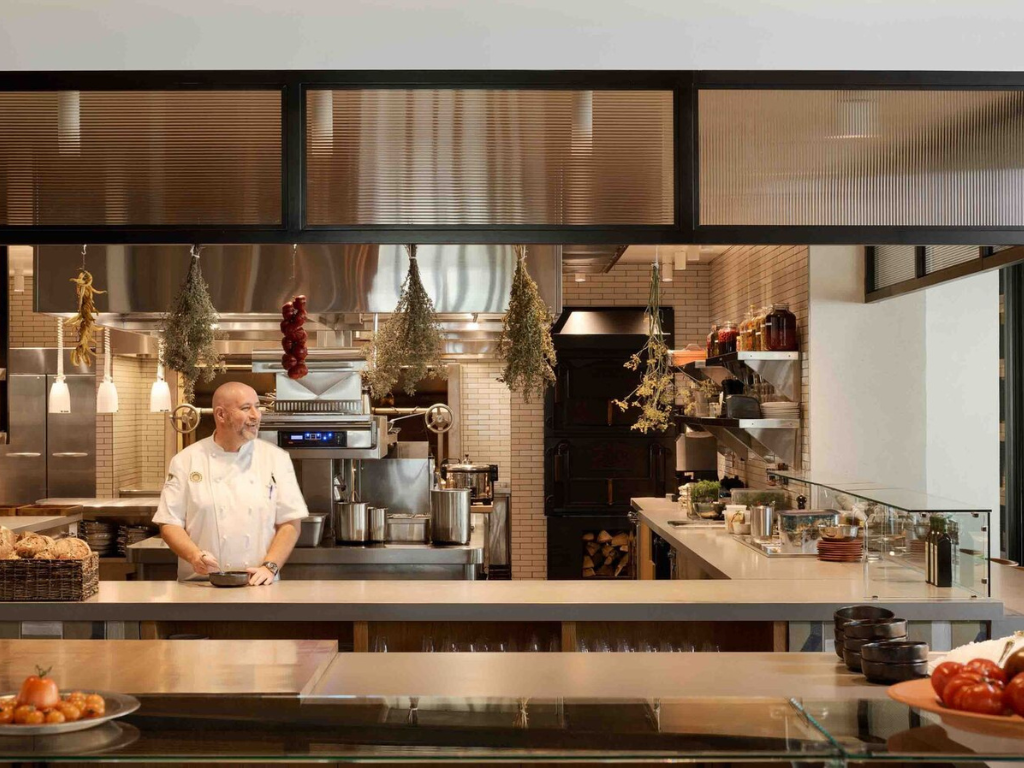
“I had this idea for a chill yet high-calibre restaurant that makes top-notch food you could eat in jeans and a T-shirt,” says Thienes, wielding a grinder over sizzling steak in the theatre kitchen beneath a faux tin ceiling.

Chef Garrett “Rusty” Thienes
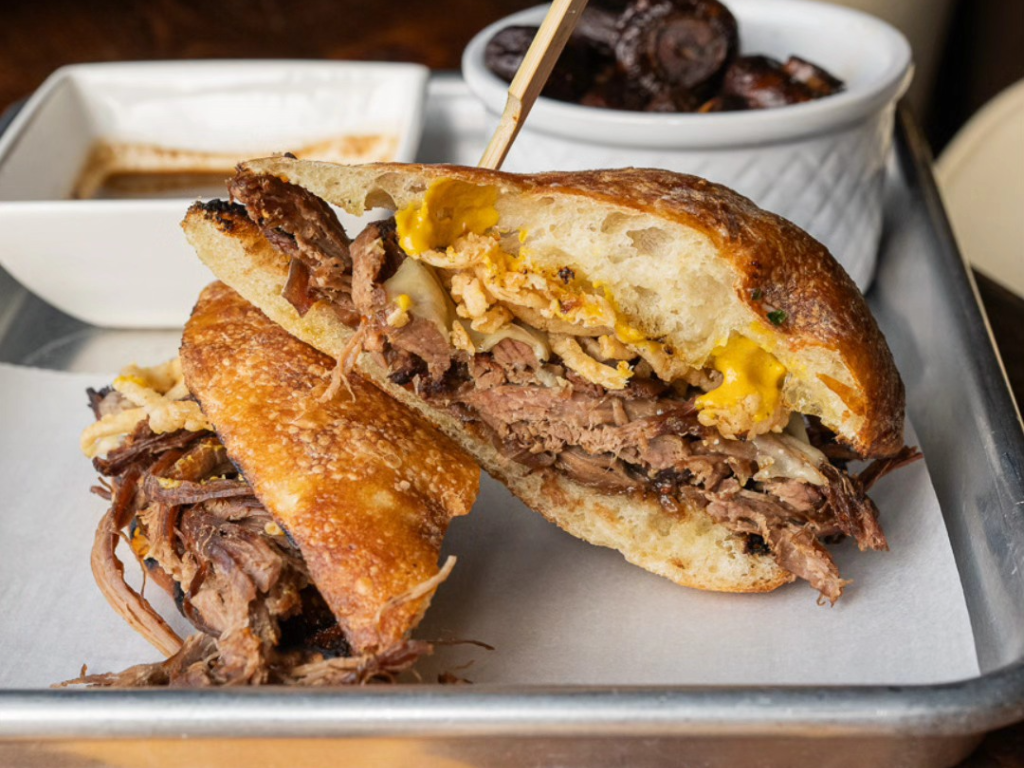
Brisket panini

With 99 per cent of its supplies sourced within 60 kilometres, Harvest Eatery has plenty to play with, from Speckled Park beef—“best beef in the world”—to bison from Wigness Farms, wild boar, rabbit, chicken, pork, durum wheat, mustard, chickpeas, lentils, mushrooms and both farmed and wild fish. “Some of the best experiences are outside urban centres, with a few exceptions. We’re a bit more fearless and inventive,” Thienes adds. “Creative chefs want to tell Saskatchewan’s food story alongside producers who are growing and raising incredible ingredients.”

According to Thienes, foodies who give Saskatchewan a chance will be “amazed as much by the hospitality as the food.” He proves it with one of the best tenderloins in the province, served in a dining room decorated with local art that hums with the buzz of regulars.

Schoolhaus Culinary Arts, Regina

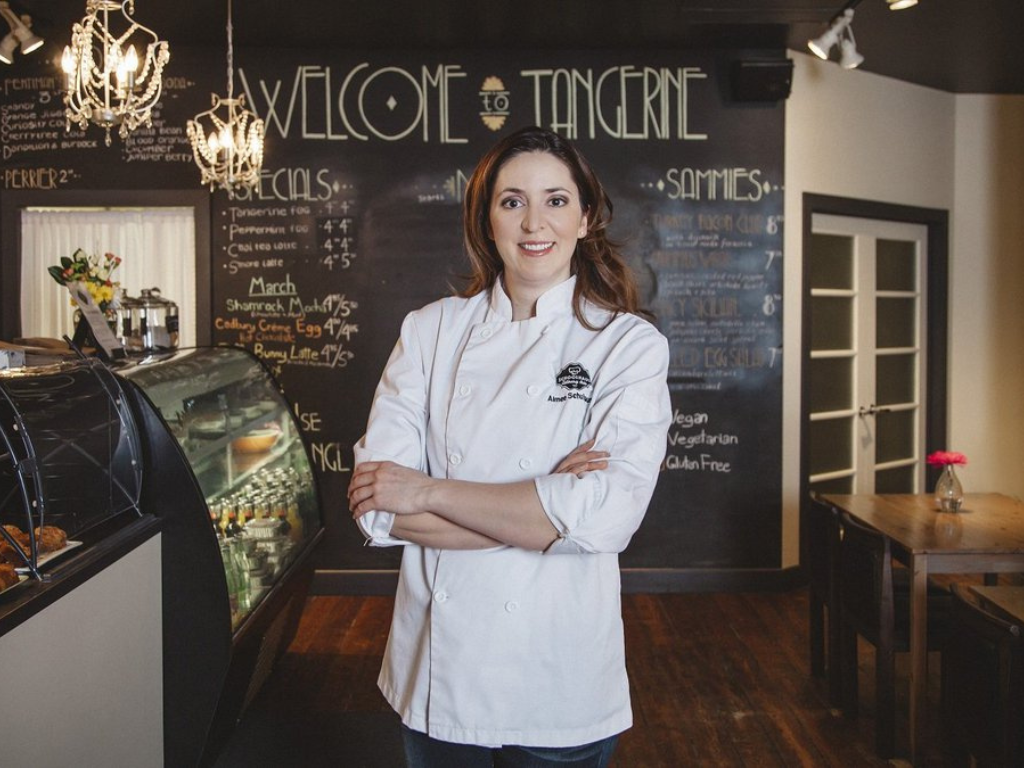
In Regina, chef and entrepreneur Aimee Schulhauser echoes this theme of warm hospitality. “Saskatchewan’s cuisine is rooted in place, full of heartfelt hospitality,” she says.

Chef Aimee Schulhauser

A graduate of Calgary’s SAIT, Schulhauser now runs a catering business, Tangerine, as well as Schoolhaus Culinary Arts. The school offers a fun night out where friends learn to cook together and then eat their creations. “Non-foodies enjoy the hands-on, interactive experience, and foodies love learning new techniques,” she says. (I mastered the butane torch while caramelizing mini parfaits.)

She has witnessed Saskatchewan’s culinary scene evolve over two decades. “When I first entered the industry 20 years ago, the ‘meat and potatoes’ stereotype was just starting to be challenged. Now, we have chef-driven restaurants, farm-to-table experiences and unapologetically prairie flavours.”

Free Bird, Lumsden

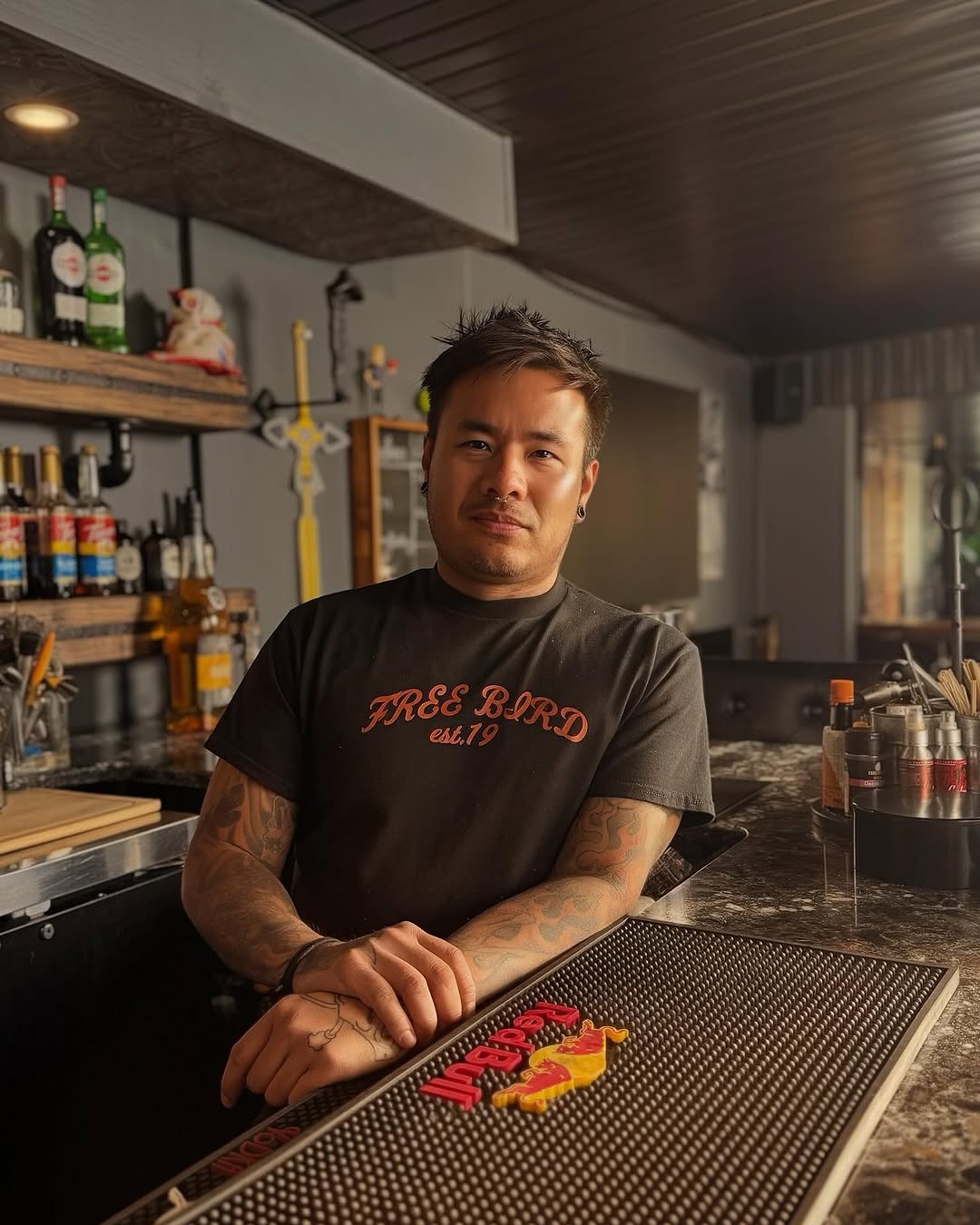
At Free Bird in Lumsden, avocado toast is elevated with pico de gallo, red grape tomatoes, herbs and chili oil on buttery sourdough, served with a soft egg on the side. It’s a playful take on what chef JP Vives calls “common food done uncommonly well.”

Chef JP Vives

Vives opened Free Bird in 2019 after training and working in B.C. and Saskatoon. For him, culinary trends grow out of close chef-producer relationships. His tie to Babco Meats, which started across the street from the restaurant, brings organic beef, pork and chicken directly into his kitchen. “I often buy from Lincoln Gardens, too. I’m just taking these amazing local ingredients and adding my own twist to make simple, good food,” he says. 

Trigo Food + Drink, Lafleche

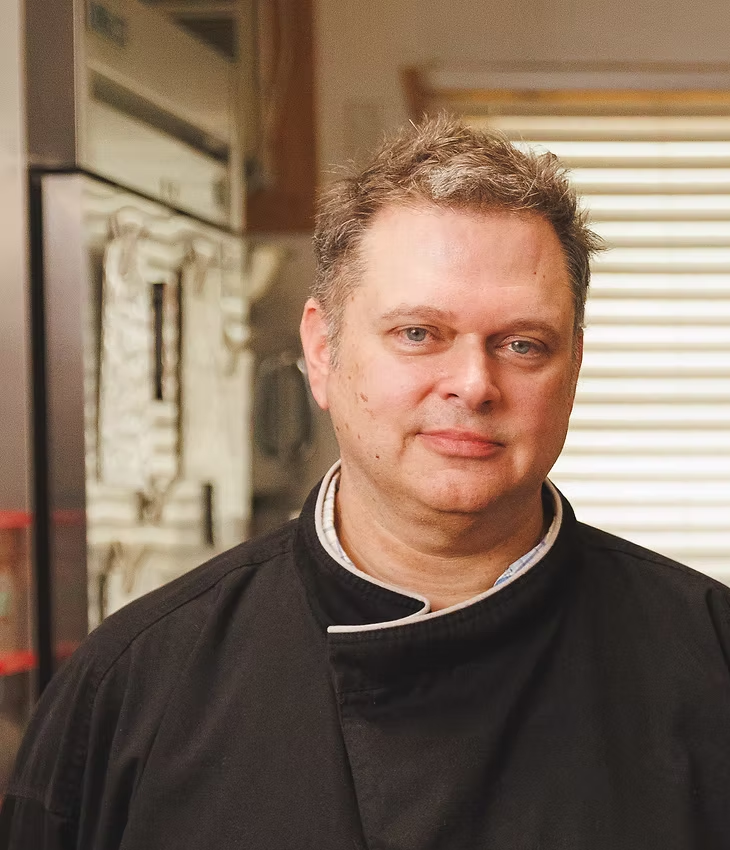
Adam Henwood, owner-chef of Trigo, exemplifies Saskatchewan’s do-it-your-own-way spirit. After 17 years as a lawyer, he left big-city Alberta for Lafleche (population: 373) and reinvented himself in the kitchen. Today, he serves multi-course tasting menus that spotlight a different country every five months.

chef adam henwood
Chef Adam Henwood

“Trigo is doing something completely unique, offering a dining experience using local fare yet authentic to a featured country,” he says.

When I visited, the theme was Georgia. Henwood orchestrated a supra, a traditional Georgian feast, pairing marigold-petal sauces with beetroot and spinach pâtés, serving cheese bread with Georgian wine and encouraging diners to slurp juice from steaming dumplings. In a room barely big enough for a dozen tables, the air filled with Georgian music as mains of beef kharcho were paired with red wine from the birthplace of viticulture.

prairie sunset
Photo by Cathy Senecal

Between courses, I dash down the town’s deserted main street to catch the setting sun tinting the grassy coulees—a moment only possible when fine dining unfolds in the middle of Saskatchewan’s Wild West.

Mystic Halifax

Air Canada Announces its Best New Restaurants for 2025

The airline has officially revealed its 2025 Best New Restaurants Top 10 list, highlighting the country’s most memorable new dining experiences.

Restaurant Le Violon Montreal
Le Violon (photo: Alex Lesage)
Maven Toronto
Maven (photo: Johnny C.Y. Lam)

Air Canada has just released its Top 10 Best New Restaurants for 2025, offering a snapshot of the openings that made an impression across the country this past year. If you’re curious about where Canadian dining is heading — or looking for ideas for your next food-focused trip — this list gives a clear sense of the restaurants worth having on your radar right now.

From intimate omakase counters to coastal tasting menus and modern neighbourhood rooms, the Top 10 reflects a range of perspectives and regional stories. Here’s a look at this year’s selections.

Canada’s Best New Restaurants: Top 10 for 2025

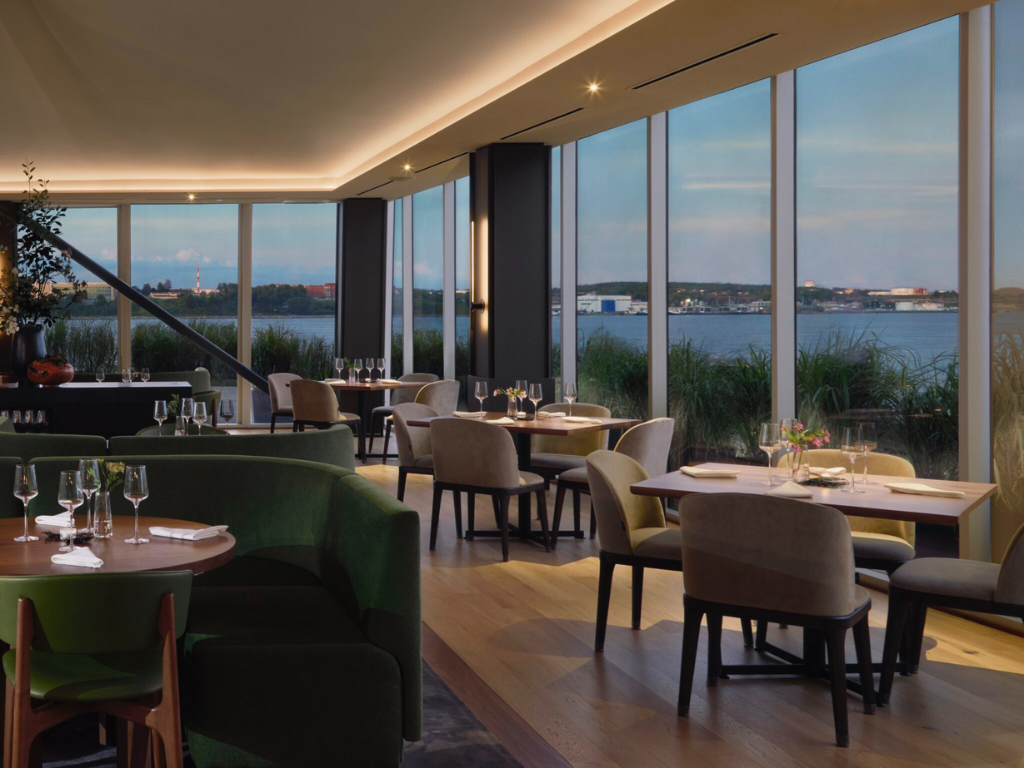
1. Mystic — Halifax, NS
A maritime tasting-menu restaurant anchored in East Coast ingredients and coastal flavours.

2. Le Violon — Montréal, QC
A refined, seasonal dining room informed by French technique and Québec’s culinary traditions (and yes — the one where Justin Trudeau and Katy Perry were famously spotted at dinner).

3. aKin — Toronto, ON
A globally influenced restaurant reflecting the city’s multicultural food culture.

4. Sushi Hyun Omakase — Vancouver, BC
An intimate omakase experience built around precision, craft and West Coast seafood.

5. Maven — Toronto, ON
Modern neighbourhood cooking inspired by Eastern-European and Jewish culinary roots.

6. Nero Tondo — Vancouver, BC
Contemporary Italian dining with a focus on handmade pastas and bold, expressive sauces.

7. Yan Dining Room — Toronto, ON
Chef Eva Chin’s set menu exploring neo-Chinese cooking through local, seasonal ingredients.

8. Sumibiyaki Arashi — Vancouver, BC
A small charcoal-grill restaurant serving seasonal fish and vegetables prepared over binchotan.

9. Pasta Pooks — Montréal, QC
Casual, youth-driven pasta with strong technique and creative flavour combinations.

10. Niwa — Vancouver, BC
A calm, nature-inspired dining room where Pacific Northwest ingredients meet Asian influences.

Japan’s Most Polarizing Superfood

By Matthew Owens

With its sticky texture and bold aroma, nattō can be an acquired taste—but for millions in Japan, it’s a superfood tied to health, culture and home.

Nattō (pronounced nah-tow) may be an unusual-looking word—and if you’ve never heard of it, you’re not alone. Unlike its more illustrious culinary cousins (think tempura, ramen and sushi), nattō hasn’t yet crossed the Pacific into the everyday lexicon of Japanese food abroad.

Its obscurity stems from its most infamous properties: a pungent odour and slimy, mucous-like texture. But don’t let that put you off. Beneath the shock factor lies a complex, fermented powerhouse of flavour that many believe could become the next “it” superfood.

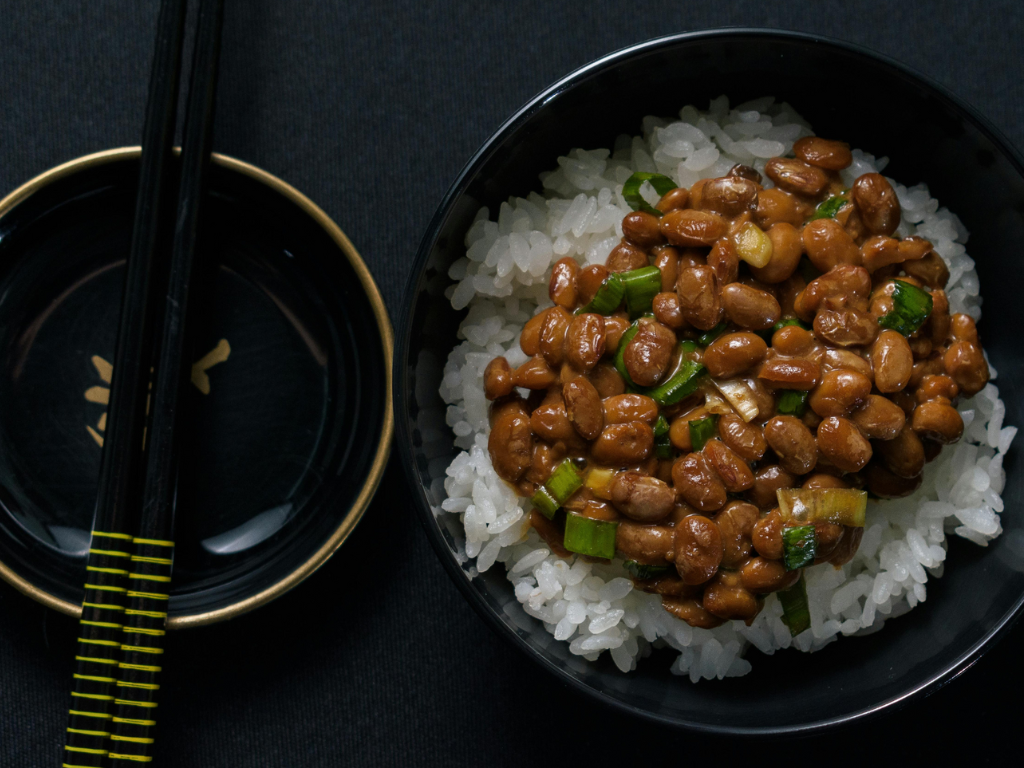
So, what exactly is nattō? Traditionally, soybeans are boiled, wrapped in straw and left to ferment with naturally occurring bacteria. Within days, the beans appear largely unchanged, but a pale, mould-like film clings to them. Stirred with chopsticks, this film stretches into sticky threads that bind the beans together, creating nattō’s signature stringy texture. The process also releases a distinctly earthy, blue cheese–like aroma.

For many, that first impression is where it ends. Yet, much like strong cheeses or kimchi, nattō’s taste belies its appearance. The flavour is subtle yet rich, with an earthy tang and an intensely savoury aftertaste—especially when mixed with the traditional condiments of sweet soy sauce and mustard.

Beloved in Japan, nattō is prized as a high-protein food (over 15 per cent) packed with gut-friendly bacteria and vitamins. It’s also remarkably affordable: a 45-gram tub can cost as little as 30 cents and is available fresh across the country. “If I only eat rice at breakfast, I won’t feel full. I think it’s because of how much protein there is,” says Yuka Megumi, a 29-year-old nursery school teacher. “I eat it every day, and if I don’t have it for breakfast, I’ll have it as a side with dinner.” She adds that variety is part of the appeal: “We always have three kinds in the fridge—chopped for my dad, soft for me and standard for my sister. There’s something for everyone.”

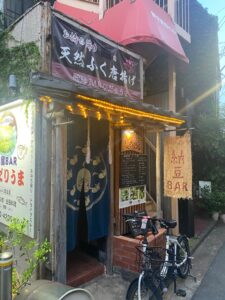
Hidariuma Tokyo (photo by Matthew Owens)

While mass-produced nattō remains the norm, some chefs are elevating it to new heights. At Hidariuma, a five-seat bar in Tokyo, owner Shōjirō Murakami serves a nattō-themed set menu in a rustic space decorated with homemade straw ornaments. Fascinated by fermentation, Murakami took a course on natural straw-fermented nattō and now produces his own on site, teaching the process to others along the way.

“I’m one of only a few restaurants that still use organic rice straw for my nattō,” he explains with pride. “If it’s touching something people will eat, I don’t want any chemicals.” His creations include whipping nattō into a paste for a hummus-like dip served with roast potatoes, stirring it into a thick sauce for mackerel and even blending it into a surprisingly refreshing smoothie.

“If I wanted to make a lot of money, I’d go back to polka,” Murakami jokes, flashing a toothy grin. But for him, the joy is in innovation, not profit.

For devotees, nattō is more than a curiosity. It’s a nutritional staple, rich in culture and character. And while its bold flavour and texture may challenge the uninitiated, it remains one of Japan’s most enduring—and intriguing—superfoods.

Appellation Healdsburg: A New Kind of Wine Country Stay

In Sonoma’s newest stay, the tasting menu never ends — from house-milled pasta at Folia to honey cocktails under the stars.

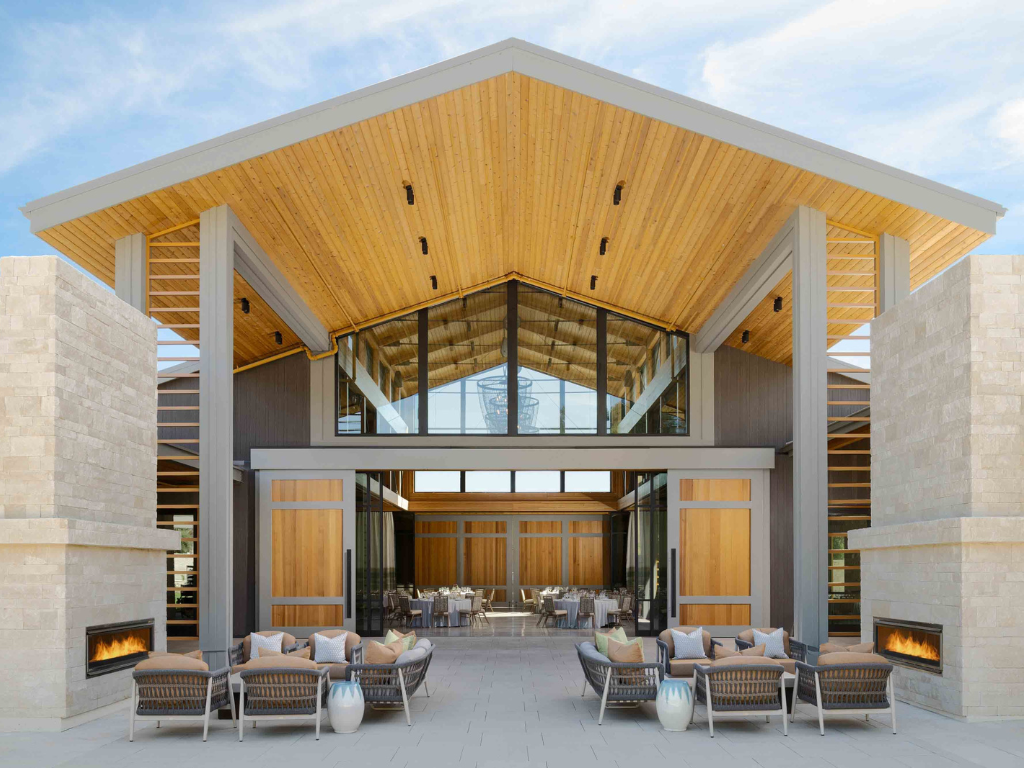
If you’ve been considering a fall visit to Sonoma, here’s your sign to book your flight. Appellation Healdsburg, the newly-opened hotel from chef Charlie Palmer and hospitality veteran Christopher Hunsberger, has officially opened its doors, inviting guests to experience wine country through a culinary lens.

Spread across eight and a half acres on the edge of downtown Healdsburg, the property unfolds like a modern-day village: gardens, outdoor lounges, and winding paths connecting a mix of suites, studios, and communal spaces. It’s the kind of setting that feels as if it’s been quietly growing here for years — natural, welcoming, and unmistakably rooted in Sonoma’s agricultural rhythm.

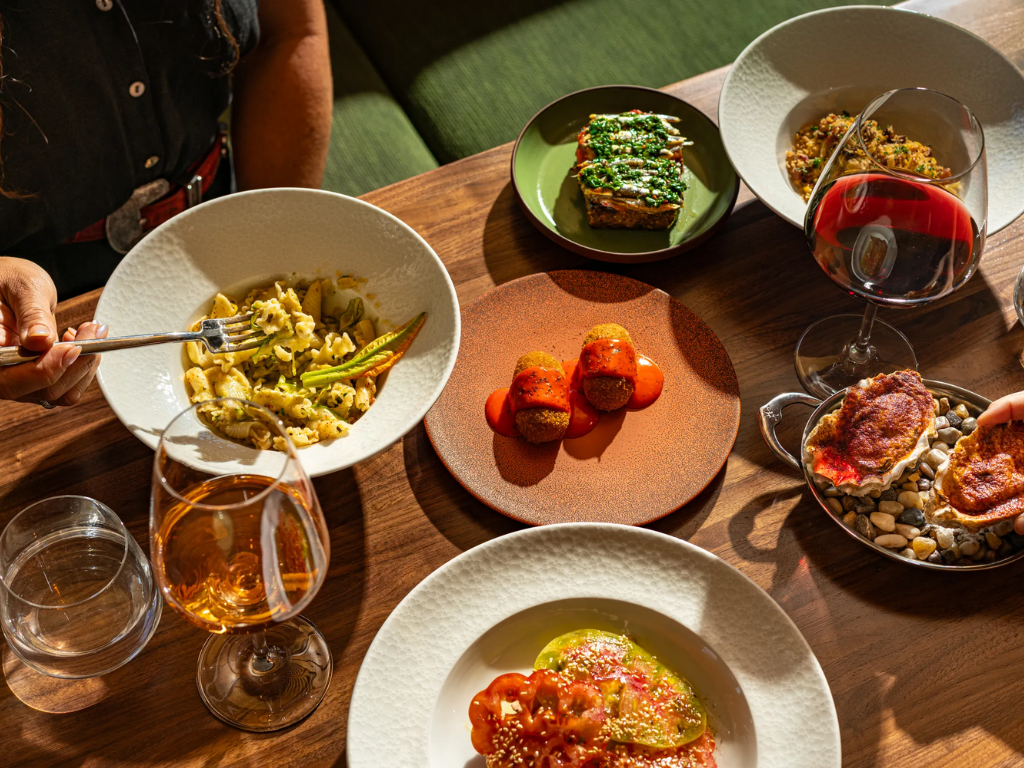
But make no mistake: this is a chef’s hotel. Every detail, from the scent of firewood drifting from the open kitchen to the house-milled flour for handmade pasta, is a nod to food as both craft and connection. The hotel’s signature restaurant, Folia Bar & Kitchen, is led by Reed Palmer (Charlie’s son), whose menu leans into elemental cooking — think smoked duck breast, ember-grilled rockfish, and wood-fired vegetables that taste like they’ve been kissed by the surrounding hills.

Upstairs, Andy’s Beeline Rooftop offers a lighter, livelier take on the region’s flavours, pairing vineyard views with inventive small plates and cocktails infused with honey, herbs, and local citrus. It’s as much a social space as it is a dining one — a place where the sun lingers, the glasses clink, and the line between bar and terrace blurs beautifully.

Beyond the restaurants, food weaves through every part of the guest experience. Welcome bites replace front-desk formality. Culinary workshops and garden tastings invite guests into the creative process. Even the on-site spa embraces the region’s bounty, with treatments inspired by botanicals and wine-country harvests.

In a landscape already rich with luxury retreats, Appellation Healdsburg stands out for its sense of purpose. It’s a property built not around opulence, but around a love of flavour — proof that in Sonoma, the true essence of hospitality still begins at the table.

Where to Savour Canada’s Indigenous Culinary Scene

Canada’s Indigenous culinary scene is blossoming, rooted in tradition yet boldly innovating with cafés, restaurants, breweries and farms that honour both the land and culture. Here’s a look at some of the newest openings and product launches across the country. 

Featured: Nk’Mip Cellars. Imagery and list courtesy of the Indigenous Tourism Association of Canada (ITAC).

Bernadette's

Cafés & Restaurants

Ancestor Café by Tradish (Fort Langley, BC)
Tradish tells stories of culture, sustainability and respect for the land through its food. At Ancestor Café, guests can enjoy bannock tacos filled with bison or elk, sweet bannock bites, artisanal jams and herbal lemonades — a menu where tradition, wellness and storytelling meet.

Salmon n’ Bannock Bistro – New Bannock Mix (Vancouver, BC)
A Vancouver institution, Salmon n’ Bannock brings modern Indigenous flavours to the table. Now, travellers can take a piece of it home with a signature bannock mix, soon available at YVR duty-free shops.

Bernadette’s (Edmonton, AB)
Opened in 2025, Bernadette’s is raising Indigenous cuisine to fine-dining heights. Founded by Chef Scott Iserhoff and Svitlana Kravchuk, the restaurant is named after Iserhoff’s grandmother and serves dishes like raw bison, Saskatoon-berry brisket on bannock, and rabbit ragu with potato dumplings.

Kahnawake Brewing Co.
Nk’Mip Cellars

Wineries & Breweries

Locality Brewing (Langley, BC)
This Métis-owned farm brewery grows and malts every ingredient on site — from barley and hops to berries and honey — crafting truly farm-to-glass beers that taste of the land they come from.

Nk’Mip Cellars (Osoyoos, BC)
North America’s first Indigenous-owned winery, Nk’Mip Cellars offers wine flights, reserve tastings and food pairings like the Four Food Chiefs experience, set against sweeping South Okanagan vineyard views.

Kahnawake Brewing Co. (Kahnawake, QC)
Canada’s first Indigenous-owned microbrewery pays homage to Mohawk ironworker heritage while producing creative, small-batch beers that have built a loyal following both locally and beyond.

Kekuli Café
Tea Horse

Coffee & Tea

Kekuli Café (Kamloops, BC)
With the motto “Don’t panic, we have bannock!”, this café puts a fun spin on Indigenous staples, serving tipi tacos, harvest bowls and baked bannock treats. New locations are expanding its reach across Canada, including soon in St. John’s, Newfoundland.

Tea Horse (Thunder Bay, ON)
Founded by Denise Atkinson, Anishinaabe ikwe, Tea Horse blends Indigenous traditions with global tea culture. Its wild-rice teas and custom blends make for a uniquely Northern Ontario sip.

Moccasin Joe Coffee Roasters (Kanehsatake, QC)
Family-owned and award-winning, Moccasin Joe focuses on ethical, small-batch roasting that puts sustainability and flavour at the forefront.

Unique Food & Farm Experiences

Pollen Nation Farm (Little Rapids, NL)
An Indigenous-owned farm and beekeeping project, Pollen Nation offers bee tours, foraging walks and fireside meals showcasing raw honey and land-based food traditions at its rustic “Beestro.”

Upper Humber Settlement (Cormack, NL)
On a historic veteran farming site, this Indigenous-owned B&B and farm-stay offers guests the chance to forage, dine farm-to-table, and hear stories around the fire, blending cultural history with regenerative farming.

To discover more Indigenous food and beverage businesses across the country, visit IndigenousCuisine.ca.

The North America’s 50 Best Restaurants 2025 List is Out

On September 25, 2025 at Wynn Las Vegas, the inaugural North America’s 50 Best Restaurants list debuted with Atomix (New York) crowned No. 1. Junghyun “JP” and Ellia Park’s intimate, design-driven counter marries Korean flavours with meticulous technique and hospitality, setting the tone for a ranking that celebrates both heritage and innovation across the continent.

Canada made a powerful showing — Mon Lapin (Montreal) landed at No. 2, Restaurant Pearl Morissette (Lincoln, ON) at No. 3 and Tanière3 (Québec City) at No. 5 — while the broader lineup highlights a vibrant mix of tasting-menu temples, neighbourhood gems and destination dining from the U.S. and the Caribbean. Pictured above? Le Violon in Montreal, No. 29 on the list, where Katy Perry and Justin Trudeau were spotted having dinner this past July.

Atomix (Photo by Evan Sung)

The List

  1. Atomix — New York

  2. Mon Lapin — Montréal

  3. Restaurant Pearl Morissette — Lincoln

  4. Smyth — Chicago

  5. Tanière3 — Québec City

  6. Dakar NOLA — New Orleans

  7. Kalaya — Philadelphia

  8. SingleThread — Healdsburg

  9. Le Bernardin — New York

  10. Le Veau d’Or — New York

  11. Quetzal — Toronto

  12. Baan Lao — Richmond (Steveston)

  13. Benu — San Francisco

  14. Californios — San Francisco

  15. The Four Horsemen — New York

  16. Friday Saturday Sunday — Philadelphia

  17. Moon Rabbit — Washington, DC

  18. Via Carota — New York

  19. Chubby Fish — Charleston

  20. Locust — Nashville

  21. Saison — San Francisco

  22. Montréal Plaza — Montréal

  23. Kono — New York

  24. Aska — New York

  25. Lazy Bear — San Francisco

  26. Kato — Los Angeles

  27. Kann — Portland

  28. Published on Main — Vancouver

  29. Le Violon — Montréal

  30. Emeril’s — New Orleans

  31. Kasama — Chicago

  32. Royal Sushi & Izakaya — Philadelphia

  33. Saga — New York

  34. Albi — Washington, DC

  35. Jungsik — New York

  36. Corima — New York

  37. Dōgon — Washington, DC

  38. César — New York

  39. Café Carmellini — New York

  40. Penny — New York

  41. Buzo Osteria Italiana — Bridgetown

  42. Holbox — Los Angeles

  43. Alma — Montréal

  44. Mhel — Toronto

  45. Alma Fonda Fina — Denver

  46. Atelier Crenn — San Francisco

  47. Providence — Los Angeles

  48. Quince — San Francisco

  49. Stush in the Bush — St. Ann

  50. Beba — Montréal

Pack Your Appetite: Taste of Shangri-La is Back

From Paris to Phuket, the luxury hotel group’s annual Taste of Shangri-La celebration returns this October with more than 100 hotels showcasing exclusive dishes, signature menus and immersive dining events.

Shangri-La Hotels & Resorts is inviting travellers to savour the flavours of the world with its much-anticipated Taste of Shangri-La culinary festival, running throughout October 2025. The month-long event spans the brand’s legendary portfolio of hotels and resorts across Europe, Asia, the Middle East, India and the Americas, each presenting multi-course menus and signature creations that reflect local traditions and global influences.

Highlights include foie gras dumplings with fruit chutney in Paris, Bánh Xèo with chicken quang noodles in Ho Chi Minh City, and hand-dived scallops with miso butter in London. In Dubai, Shang Palace will showcase Cantonese flavours with dishes such as King Oyster Mushrooms with Charcoal-Steamed Buns, while in Abu Dhabi, Bord Eau will serve French gastronomy with dishes like Rose de Saumon paired with green apple and miso gel. Guests can also expect curated wine pairings, immersive dining events and exclusive menus designed by Shangri-La’s award-winning chefs.

More than 28 signature restaurants and 14 hotels will participate in this year’s edition, giving travellers the chance to discover new flavours while celebrating Shangri-La’s rich culinary heritage. 

Learn more on the Shangri-La website.

Where Celebs Will Be Dining During TIFF 2025

When TIFF rolls into town (September 4–14), Toronto transforms into Hollywood North — not just on the red carpet, but at the dinner tables too. For ten glittering days, restaurants become backdrops for industry deals, stolen moments, and the occasional paparazzi flash. Here’s where the style icons and film legends are most likely to dine, toast, and perhaps be caught mid-laugh.

The buzz is loud at Nobu Toronto (pictured), the long-awaited Mercer Street outpost of the world-famous brand. Since opening, it has quickly become a celebrity staple. Drake and Pharrell Williams have already been spotted, and the lively bar is just as star-studded as the upstairs omakase. 

A few blocks away, Enigma Yorkville is a jewel box of the scene: tucked away on St. Thomas Street, it serves a refined seasonal tasting menu that blends Japanese precision with Nordic minimalism. It’s no wonder Toronto’s power set — and TIFF’s visiting stars — gravitate here when they want a little quiet luxury with their culinary artistry

Yorkville also shines at Adrak, where Michelin-level Indian cuisine and plush interiors have hosted everyone from the Jonas Brothers to Jessica Alba. It’s the kind of room where rich curries and glittering company go hand in hand.

On King West, the energy shifts into high-octane glamour. Minami (above) delivers with its A5 wagyu and cocktail craft, while just down the street, the Ace Hotel’s Evangeline rooftop lures festival crowds with ’70s-inspired share plates and that golden-hour glow perfect for selfies.

Meanwhile, Ossington keeps its cool edge with Lunch Lady, the Vietnamese comfort-food spot that turns into an industry hangout during TIFF, thanks to its vibrant cocktails and come-as-you-are charm. And for late-night escapades, Vinny Restaurant & Vinyl Bar is pure retro glitz — shrimp toast, disco lighting, DJ sets — the kind of place where you might bump into Dakota Johnson on the dance floor or Jude Law leaning against the bar.

This year, two new contenders are jostling for the after-hours crown. Bar Clams, Matty Matheson’s rollicking seafood diner, and Tha Phae Tavern, a riot of karaoke and claw machines, bring the kind of chaotic fun that even celebs can’t resist. They’re buzzy, unpolished, and all the more irresistible for it.

And finally, Abrielle (pictured) has emerged as another chic contender. With Mediterranean-inspired plates and a stylish room that straddles polished dining and easygoing warmth, it’s poised to host plenty of quiet tête-à-têtes between screenings.

TIFF is celebrating its 50th edition this year, and Toronto’s dining rooms are ready for their own close-ups. Whether you’re chasing star sightings or simply soaking in the atmosphere, these restaurants prove that the real festival often happens long after the credits roll.

Sandblu’s New Blu Restaurant Brings Aegean Luxury to Santorini’s Caldera

Santorini has no shortage of spectacular terraces, but few offer the kind of stage now set by Blu, the new signature restaurant from Sandblu resort. Designed by the acclaimed Rockwell Group, the just-opened dining destination extends the resort’s tranquil East-side ethos to the island’s most iconic setting: the UNESCO-listed Caldera. 

From morning brunch to late-night cocktails, Blu invites guests into a day-to-night rhythm that fuses Greek Mediterranean tradition with global culinary flair. Menus highlight local produce and fresh catch, but with cosmopolitan touches — think Sea Bass Crudo, Lobster Pasta enriched with sweet Samos wine, and Shredded Oxtail paccheri with graviera cream and summer truffle. Even brunch turns indulgent, with creations like Mascarpone Pancakes layered with berries and orgeat maple syrup or a playful Surf & Turf of scallops and ibérico ham.

The 150-seat restaurant was designed as an experience of its own. An expansive white-marble terrace gazes across Skaros Rock and the Aegean, while airy interiors echo Santorini’s volcanic palette of whites and blues. An open-air bar and reflection pool anchor the space, as a resident DJ’s soft soundtrack mingles with the sound of waves below.

Blu’s wine list showcases Santorini vintages alongside international labels, while the cocktail menu leans into creative riffs on Greek flavours — from the cucumber-bright Katsouni Gimlet to the bold Bloody Marika, spiced with tsikoudia and local tomato juice.

For those seeking a setting as memorable as the meal, Blu doubles as a venue for weddings and milestone celebrations, with in-house event planning and catering to match the views.

Whether you come for brunch, linger into sunset cocktails, or celebrate under the stars, Blu has quickly established itself as a must-visit destination in Santorini’s dining scene — and the newest jewel in Sandblu’s crown.

North America’s 50 Best Restaurants Honours Quebec’s Tanière3 for Art of Hospitality

When it comes to unforgettable dining, atmosphere and service can be just as memorable as what’s on the plate. That’s why North America’s 50 Best Restaurants created the Art of Hospitality Award — and this year, the very first honour goes to Tanière3 in Quebec City.

Set in the vaulted cellars of two historic houses between the St. Lawrence River and Place Royale, Tanière3 is an immersion into Quebec’s culinary soul. Chef François-Emmanuel Nicol and co-owner Roxan Bourdelais have reimagined fine dining as a story of place: 10 to 15 seasonal courses crafted almost entirely from Quebec-sourced (often foraged) ingredients, each one revealed in real time to keep curiosity alive until the very last bite.

Guests can choose between the Chef’s Counter Cellar, where you watch the team at work and interact with Nicol directly, or the Dining Room Cellar, an equally atmospheric but more traditional setting. Whichever path you take, expect hospitality that feels deeply personal — a hallmark of the Tanière3 experience.

As William Drew, Director of Content for North America’s 50 Best Restaurants, put it: “Tanière3 delivers far more than just fine dining – it offers a personal experience rooted in the warmth, care, and pride of Quebec.”

The 2025 awards ceremony takes place September 25 in Las Vegas, when the full list of North America’s 50 Best Restaurants will be revealed. Until then, Quebec has every reason to celebrate: one of its most innovative dining rooms has just been recognized as setting the gold standard for hospitality.