
Tag: South America

Brazilian Feijoada

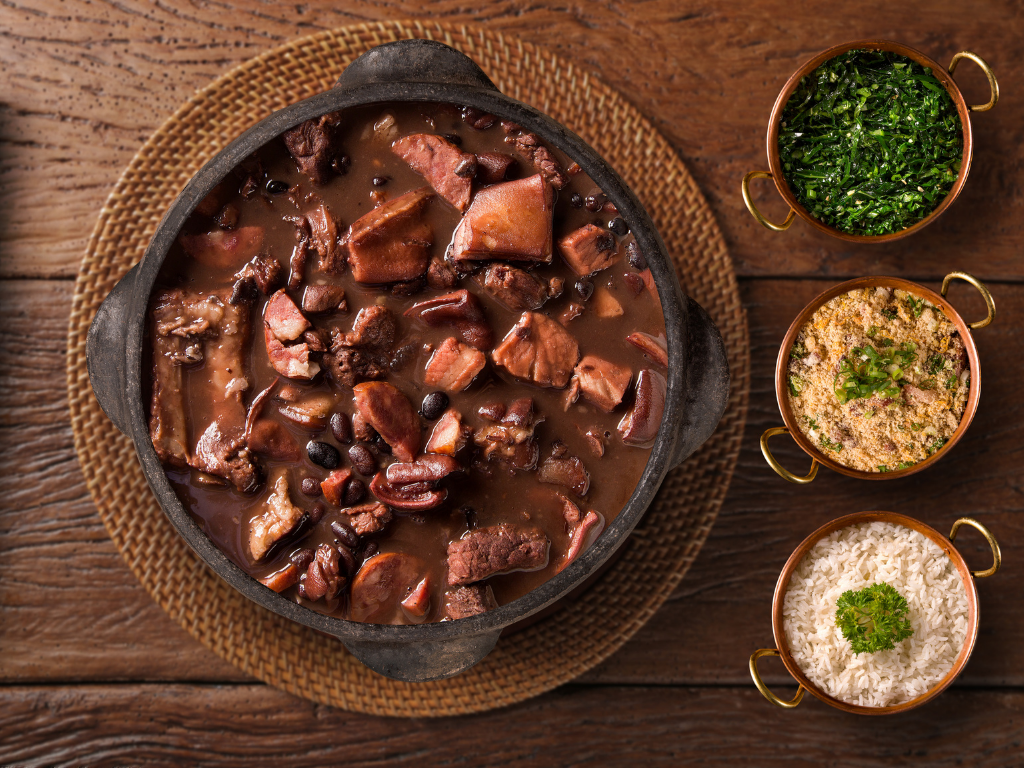
What Is Brazilian Feijoada?

Brazil’s signature black bean stew is defined by tradition, flavour and the way it brings people together.

Some dishes always feel like they’ve been lovingly made, even when you’re eating out. In Brazil, feijoada is one of them. The slow-simmered black bean stew reflects the country’s history, culture and way of gathering, and it always tastes like a home-cooked meal made just for you.

At its simplest, feijoada combines black beans with pork cuts, including sausages and salted or smoked meats. Cooked low and slow with garlic, onion and bay leaf, it develops a deep, savoury richness that defines the dish.

Feijoada reflects Brazil’s layered culinary history.

Often linked to Brazil’s colonial era, feijoada is widely associated with resourceful cooking traditions that made use of available ingredients. Over time, it evolved under the influence of Portuguese stews and African techniques, becoming a staple across the country. Today, it’s less about necessity and more about identity.

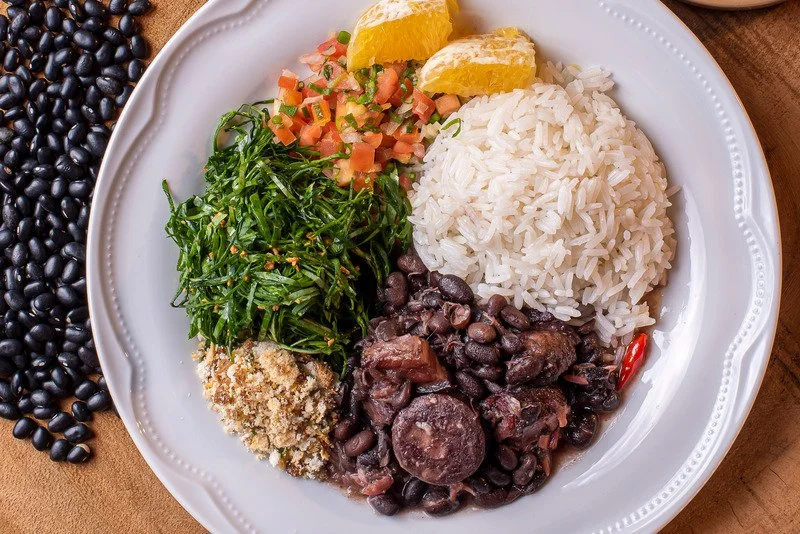
A traditional feijoada is defined as much by its accompaniments as by the stew itself.
https://images.squarespace-cdn.com/content/v1/65106e4e43a61934a4ebb67f/1714727026579-P8ZBFBFRL8QNSRVUEPQU/2.jpg
 
Feijoada is always served with accoutrements, with each element balancing the richness of the stew
  • White rice
  • Couve (garlic-sautéed collard greens or kale)
  • Farofa (toasted cassava flour)
  • Orange slices for brightness and to help with digestion

Traditionally served on Wednesdays and Saturdays, feijoada is meant to be shared. Meals stretch over hours, often accompanied by music and conversation, particularly in cities like Rio de Janeiro and São Paulo. It’s as much about the setting as the food itself.

The best place to try feijoada depends on the experience you’re after.

Across Brazil, feijoada adapts to its surroundings:

  • In Rio de Janeiro, you can find it on almost every menu. The Copacabana Palace has a very reasonably priced lunchtime feijoada experience, and it doubles as an experience to visit the historic property without a booking. In Santa Teresa, try Bar do Mineiro or the pretty courtyard at Armazém São Joaquim.
  • In São Paulo, it ranges from traditional to refined
  • In Minas Gerais, it leans rustic and deeply regional

What began as a humble, slow-cooked stew is now one of Brazil’s most recognizable culinary expressions.

For travellers, it offers something simple but meaningful: a direct connection to place, through the table. And a filling meal to refuel after a day of exploration.
White fish empanadas recipe

Recipe: Whitefish Empanadas With Charred Tomato Salsa

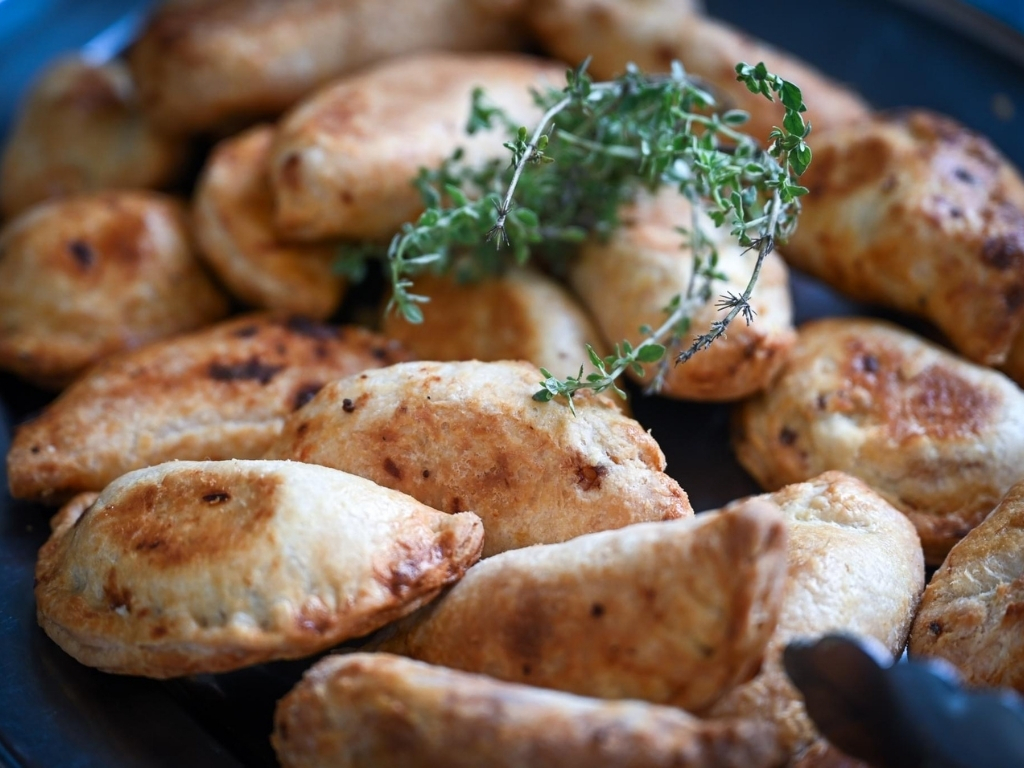
These whitefish empanadas, courtesy of award-winning Indigenous chef Stephanie Baryluk, transform humble ingredients into something deeply satisfying. Baked until golden and served with a smoky charred tomato salsa, they’re ideal as a shared appetizer or relaxed dinner.

Empanada dough

2 ½ cups all-purpose flour

½ tsp. salt

1 stick of butter chilled and cut into small pieces

2 eggs divided, one egg to seal the empanadas

¼ cup ice cold water

Empanada filling

  • 1.5 cups russet potato, peeled and diced
  • 2 tbsp. garlic, minced
  • ½ cup yellow onion, diced 
  • ½ cup green onion, sliced
  • 2 cups cooked whitefish 
  • 1 tbsp. Old Bay seasoning
  • 1 tbsp. lemon juice
  • 2 tbsp. mayonnaise
  • Salt and pepper to taste


Method

Preheat oven to 350°F. Season whitefish with salt and pepper and bake for 15-20 minutes, or until thoroughly cooked. Set aside and let cool. In a medium pan, sauté onions, garlic and potatoes over medium heat until soft. Season with salt, pepper, lemon juice and Old Bay. In a large mixing bowl combine cooked fish, potato mixture, green onions, and mayonnaise and set aside to chill.

In a food processor, mix flour and salt. Add butter, egg and cold water to the flour mixture. Pulse until mixture resembles coarse crumbs. Shape the dough into a ball and wrap dough with plastic. Chill for 30 minutes to one hour. Remove dough from the fridge and on a lightly floured surface, roll dough into a thin sheet and cut discs using a large biscuit cutter. Place approximately one tbsp. of filling into each empanada. Fold the empanada discs and seal the edges with a fork or your fingers. In a separate bowl, beat one egg and brush the top of the empanadas with beaten egg to help seal. Preheat oven to 400°F and bake for 12-15 minutes or until golden. Serve with charred tomato salsa.

Charred tomato salsa

  • 1 tsp. olive oil
  • 6 medium tomatoes
  • 1 jalapeno pepper
  • 4 garlic cloves
  • 1 red onion
  • 1 cup green onions, chopped
  • ¼ cup lime juice 
  • salt and pepper to taste
  • 1 cup green onions
  • Salt and pepper to taste


Method

Pre-heat oven to 425°F. Place all vegetables on a baking sheet and drizzle with olive oil. Roast for approximately 20-25 minutes, or until charred. Set aside vegetables in a bowl and allow to cool. Peel off and discard charred skins, as well as all seeds from the jalapenos. Cut tomatoes into quarters. Add all ingredients into a food processor and blend to desired chunkiness.