
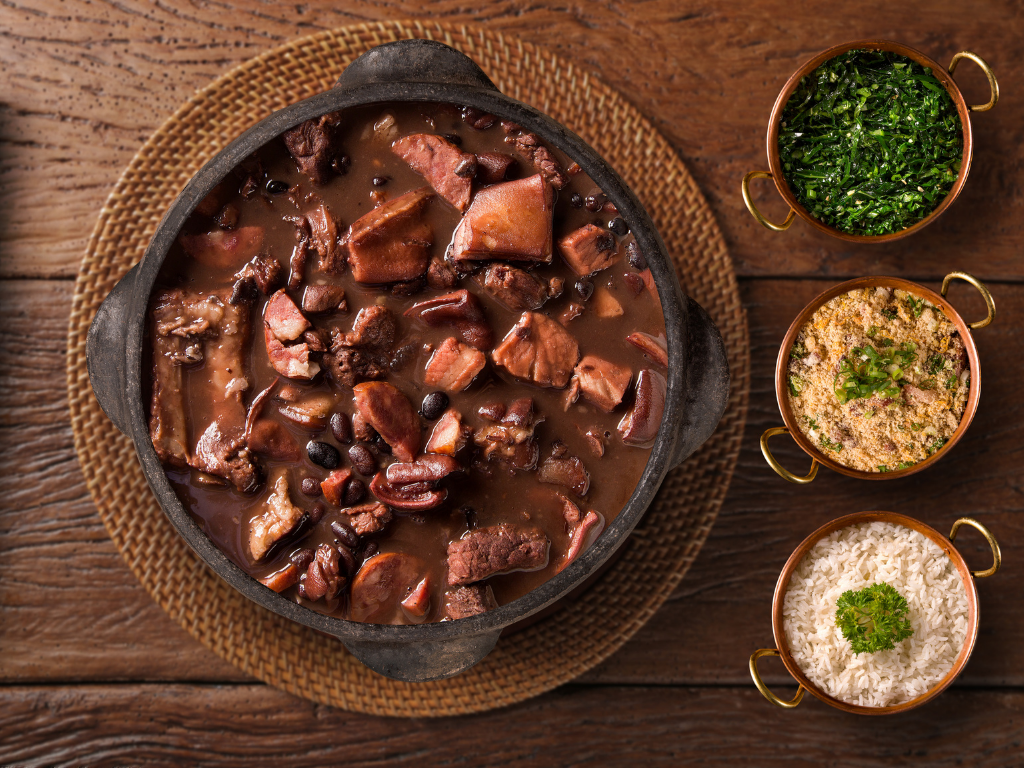
Some dishes always feel like they’ve been lovingly made, even when you’re eating out. In Brazil, feijoada is one of them. The slow-simmered black bean stew reflects the country’s history, culture and way of gathering, and it always tastes like a home-cooked meal made just for you.
At its simplest, feijoada combines black beans with pork cuts, including sausages and salted or smoked meats. Cooked low and slow with garlic, onion and bay leaf, it develops a deep, savoury richness that defines the dish.
Feijoada reflects Brazil’s layered culinary history.
Often linked to Brazil’s colonial era, feijoada is widely associated with resourceful cooking traditions that made use of available ingredients. Over time, it evolved under the influence of Portuguese stews and African techniques, becoming a staple across the country. Today, it’s less about necessity and more about identity.
A traditional feijoada is defined as much by its accompaniments as by the stew itself.
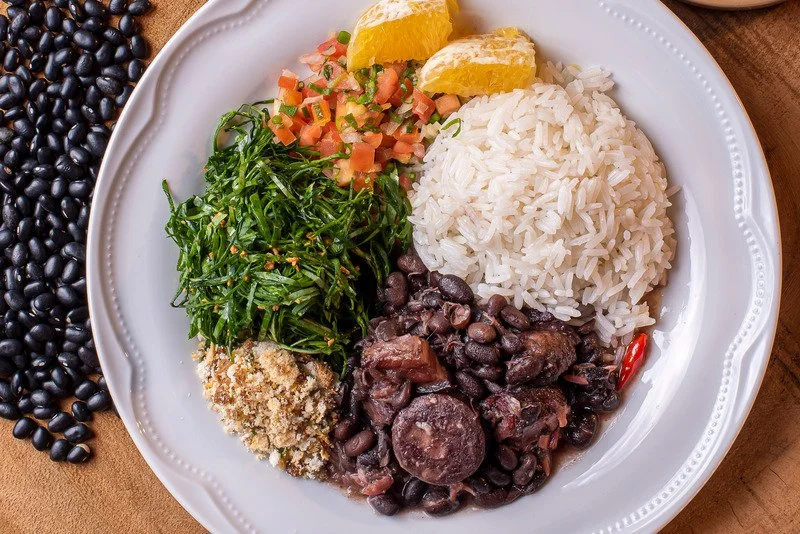
- White rice
- Couve (garlic-sautéed collard greens or kale)
- Farofa (toasted cassava flour)
- Orange slices for brightness and to help with digestion
Traditionally served on Wednesdays and Saturdays, feijoada is meant to be shared. Meals stretch over hours, often accompanied by music and conversation, particularly in cities like Rio de Janeiro and São Paulo. It’s as much about the setting as the food itself.
The best place to try feijoada depends on the experience you’re after.
Across Brazil, feijoada adapts to its surroundings:
- In Rio de Janeiro, you can find it on almost every menu. The Copacabana Palace has a very reasonably priced lunchtime feijoada experience, and it doubles as an experience to visit the historic property without a booking. In Santa Teresa, try Bar do Mineiro or the pretty courtyard at Armazém São Joaquim.
- In São Paulo, it ranges from traditional to refined
- In Minas Gerais, it leans rustic and deeply regional
What began as a humble, slow-cooked stew is now one of Brazil’s most recognizable culinary expressions.
For travellers, it offers something simple but meaningful: a direct connection to place, through the table. And a filling meal to refuel after a day of exploration.